Punts in Play: Britain's Betting Scene Heats Up with New Twists
Written by Taylor Krüger · Apr 25, 2026

UK Gambling Commission Tracks Fluctuating Traffic to Illegal Sites Amid Data Refinements
Latest Insights from the Commission's Data Hub
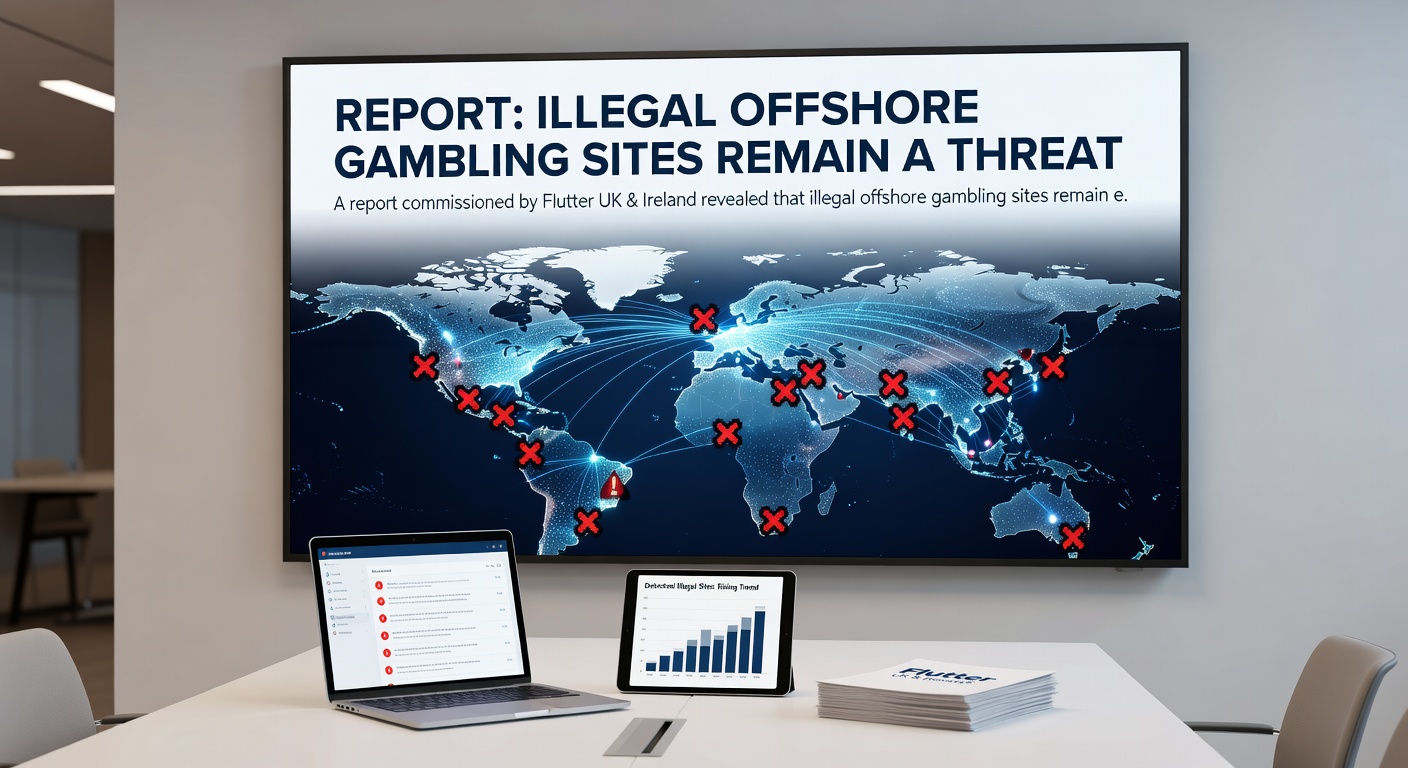
Tim Livesley, Head of the Data Innovation Hub at the UK Gambling Commission, dropped a detailed blog post on April 21, 2026, shedding light on consumer engagement trends with illegal gambling websites; figures reveal web traffic estimates that fluctuated steadily from July 2025 through February 2026, showing no consistent upward trajectory or predictable seasonal spikes, even after researchers adjusted for VPN usage which often masks such activity.
What's interesting here is how these patterns challenge earlier assumptions about a relentless surge in illegal site visits; instead, data indicates a more erratic picture, with monthly visits hovering without dramatic climbs or drops, prompting observers to rethink the dynamics at play in the unregulated corners of online gambling.
Take the period from July to September 2025, for instance, where traffic held relatively flat before dipping slightly in the autumn months; by December, numbers ticked up modestly during what many expect as a holiday betting rush, yet they leveled off again into early 2026, underscoring that no single factor like festive seasons drove sustained engagement.
Adjusting for VPNs and Evasion Tactics
Researchers at the Commission went beyond raw numbers, incorporating sophisticated adjustments for VPN traffic which illegal operators lean on heavily to dodge detection; this methodological tweak paints a clearer, albeit still fluctuating, view of actual UK consumer access, revealing that even with these tools in widespread use, engagement remains inconsistent rather than booming.
And while some might picture illegal sites as shadowy magnets pulling in punters en masse, the reality is far more nuanced; data from these adjusted estimates shows traffic volumes that ebb and flow, sometimes rising 10-15% month-over-month before retreating, a pattern that experts have observed persisting across the eight-month span without tipping into exponential growth.
Those who've dug into similar datasets note how VPN adjustments matter because they filter out inflated figures from non-UK sources, ensuring the spotlight stays on domestic consumers who, turns out, aren't flocking to these sites in predictable waves.
Refining Data Through Collaborative Efforts
The Commission isn't standing still on this front; Livesley's update highlights ongoing improvements to data collection and analysis, forged through close collaboration with industry players and fellow regulators, all aimed at sharpening the lens on illegal gambling's reach.
Key to these enhancements are insights drawn from the Gambling Survey for Great Britain (GSGB), which captures self-reported behaviors, and Consumer Voice research that amplifies user perspectives; together, these sources help triangulate web traffic data, providing a fuller picture than any single metric could alone.
But here's the thing: by weaving in GSGB findings—which track participation rates across legal and illegal channels—with Consumer Voice inputs on why punters stray off the beaten path, the Commission builds robust models that account for both volume and motivation, steering clear of overreliance on web analytics prone to manipulation.
Industry partnerships play a pivotal role too; operators share anonymized data on blocked domains and user referrals, while regulators cross-reference enforcement logs, creating a multi-layered approach that, according to the blog, has already yielded more reliable trend signals since late 2025.
Patterns That Defy Easy Predictions
Diving deeper into the fluctuations, July 2025 kicked off with moderate traffic levels that held steady through August, only to wobble downward in September amid back-to-school routines; October saw a brief uptick, perhaps tied to football season's start, but November flattened it out again, and December's modest rise—nowhere near explosive—faded by January 2026 as resolutions and resets took hold.
February wrapped the reported period with numbers akin to mid-summer, closing the loop on a timeline marked by variability rather than velocity; experts point out that absent seasonal surges, like those around major events such as Cheltenham or the World Cup qualifiers, suggests deeper, less event-driven drivers behind any engagement.
One study referenced in broader Commission work, such as Understanding Consumer Engagement with Illegal Online Gambling, echoes this by noting how access persists not through hype but steady, opportunistic visits, a trend the latest blog data reinforces without contradiction.
So, while illegal sites maintain a foothold, the lack of consistent growth signals that regulatory pressures and licensed alternatives might be holding the line more effectively than raw numbers once implied.
Implications for Monitoring and Enforcement
Livesley's post doesn't just catalog trends; it outlines how refined data approaches empower proactive enforcement, with VPN-adjusted metrics enabling quicker identification of high-risk domains and consumer hotspots.
Collaborations extend to tech firms too, where machine learning models process GSGB and Consumer Voice data alongside traffic logs, flagging anomalies that human analysts might miss; this hybrid method, rolled out progressively since 2025, has boosted detection rates, although exact figures remain under wraps in the update.
People in the sector who've followed these evolutions often discover that such integrations turn scattered data points into actionable intelligence, helping block more illegal gateways before they scale.
Yet, the blog stresses ongoing challenges, like evolving evasion tactics that demand perpetual adaptation; that's where cross-regulator info-sharing shines, pooling resources to stay one step ahead in a cat-and-mouse game with offshore operators.
Broader Context in Consumer Protection
GSGB surveys, conducted annually, reveal steady illegal participation rates around 1-2% of gamblers, but when layered with traffic data, they highlight that most engagement stems from curiosity or promo lures rather than mass migration; Consumer Voice adds color, with reports of users citing better odds or faster payouts as draws, even as risks loom larger.
Now, with April 2026's update in hand, stakeholders see a roadmap for tighter monitoring; the Commission's hub continues iterating, testing new proxies for engagement like payment flows and social media signals, all while VPN adjustments keep estimates grounded.
Turns out, this multifaceted strategy not only maps the fluctuations but anticipates shifts, ensuring licensed markets remain the default for UK punters navigating an increasingly scrutinized online landscape.
Conclusion
In the end, Tim Livesley's April 21, 2026, blog post stands as a milestone in transparent tracking, with fluctuating web traffic to illegal gambling sites from July 2025 to February 2026 underscoring a landscape of stability over surge, bolstered by VPN corrections and no clear seasonal fingerprints.
Through ramped-up collaborations, GSGB integrations, and Consumer Voice infusions, the UK Gambling Commission sharpens its tools, equipping enforcers with data that flows from raw metrics to refined foresight; observers note this positions the regulator to curb risks effectively, keeping consumer protection at the forefront amid an ever-adaptive illicit sector.
The ball's now in the industry's court to amplify these efforts, as steady vigilance promises to maintain the delicate balance between access and accountability in UK gambling.