Midweek Deposit Match Structures Among British Bookmakers: Sustaining Activity Through Tuesday to Thursday Offers
Written by Wendy Lehmann · Aug 6, 2026

Midweek Deposit Match Structures Among British Bookmakers: Sustaining Activity Through Tuesday to Thursday Offers
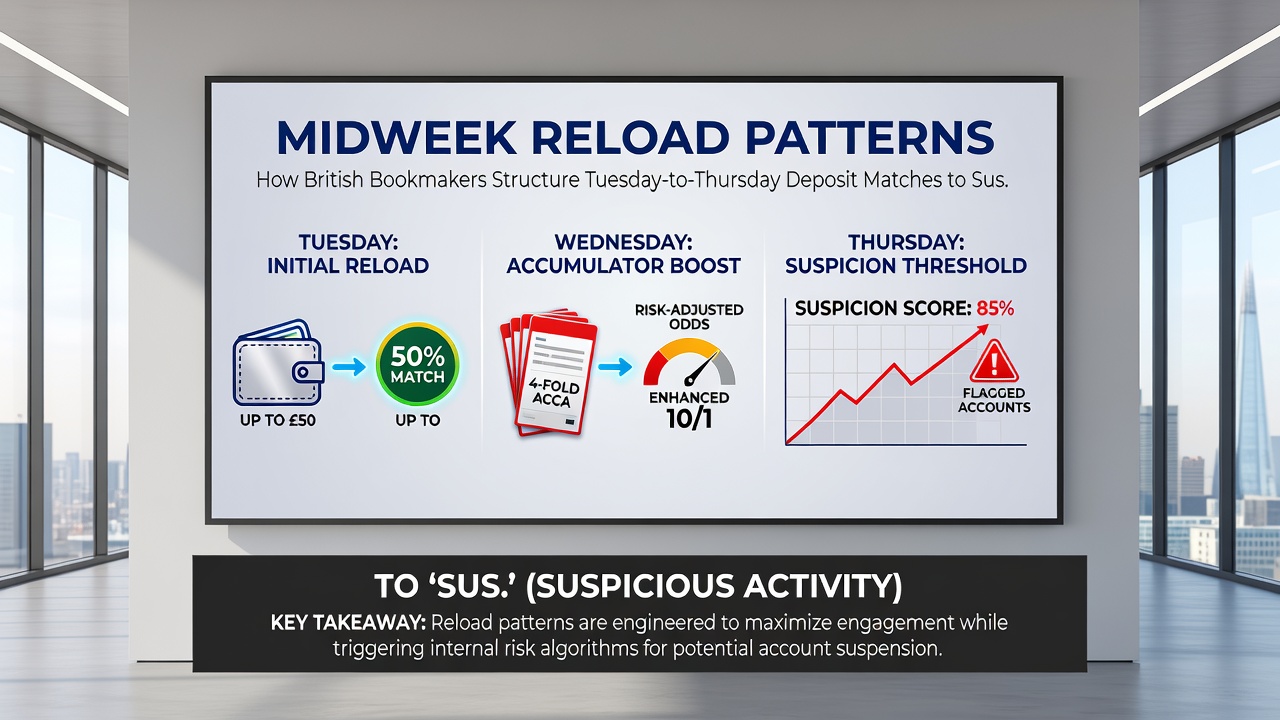
British bookmakers have developed specific patterns for deposit match offers that run from Tuesday through Thursday, and these reload bonuses follow clear structures designed to maintain consistent player engagement during traditionally quieter periods of the week. Operators calculate bonus amounts based on deposit size, often matching 50 percent or 100 percent up to fixed limits that range from £10 to £50, while imposing wagering requirements between 5x and 10x the combined deposit and bonus funds before withdrawals become available.
Core Mechanics of Tuesday-Thursday Reload Offers
Deposit match promotions during midweek operate through automated systems that trigger upon qualifying deposits made between midnight Tuesday and midnight Thursday. Bookmakers set eligibility criteria that typically require account verification and prior deposits in the preceding seven days, which ensures the offers reach active users rather than new sign-ups alone. Data from industry reports shows these reloads account for a measurable portion of total bonus volume, with operators tracking redemption rates that peak on Wednesday afternoons when user traffic dips compared to weekend peaks.
Many platforms apply tiered matching scales where larger deposits unlock higher percentage matches or extended validity periods for the bonus funds. A player depositing £20 might receive a £10 match with a 7x wagering condition, whereas a £40 deposit could trigger a £30 match under identical terms, and these variations encourage incremental deposit increases without altering the core structure. Observers note that such scaling appears consistently across multiple operators, reflecting shared approaches to risk management and player retention metrics.
Regional Data and Timing Patterns
Figures compiled for August 2026 indicate that midweek reload activity in Britain rose compared to the same period in prior years, coinciding with adjustments in promotional calendars across several major platforms. External analyses from sources like the European Gaming and Betting Association highlight how operators time these offers to align with pay cycles and sporting fixtures that fall midweek, such as European football matches and domestic horse racing events. The timing creates overlapping incentives where deposit matches coincide with available betting markets, which sustains activity levels without requiring changes to core product offerings.
Research from academic studies on gambling behavior, including work published through institutions like the University of Sydney's Gambling Research Centre, reveals that players respond to structured reload patterns by spreading deposits across multiple days rather than concentrating activity on weekends. This distribution helps operators smooth revenue streams and reduces volatility in daily transaction volumes. British platforms have incorporated these insights into their systems, often sending targeted notifications on Tuesday mornings to prompt deposits before midday.
Wagering Requirements and Compliance Elements
Wagering conditions attached to Tuesday-Thursday deposit matches follow standardized formulas across operators, with contributions from different bet types weighted differently toward requirement completion. Sportsbook wagers typically count at 100 percent, while casino-style games contribute at lower rates or face exclusion entirely. These distinctions direct player behavior toward sports products during the midweek window, which aligns with the stronger margins operators achieve on those markets compared to slots or table games.
Operators maintain audit trails for these promotions through integrated compliance software that flags accounts exceeding deposit thresholds or showing irregular patterns. External oversight from bodies such as Australia's Gambling Research Australia has documented similar reload structures in other regulated markets, noting that consistent application of rules reduces disputes and supports responsible gambling messaging. British bookmakers apply these same principles, displaying requirement progress bars within user accounts and providing clear expiry dates that usually fall seven to fourteen days after bonus activation.
Player Segmentation and Offer Customization
Segmentation strategies divide users into groups based on historical deposit frequency and average transaction size, then tailor midweek reload terms accordingly. High-frequency depositors might receive enhanced match percentages or reduced wagering multiples, while occasional players encounter standard terms that still provide entry points without excessive generosity. This customization relies on algorithmic analysis of account data collected over previous months, allowing operators to allocate bonus budgets where they produce the highest retention impact.
Case examples from platform analytics demonstrate that players who redeem midweek deposit matches show higher return rates the following week compared to those who do not engage with the offers. The pattern holds across demographic segments, though younger users tend to interact more readily with mobile notifications while older cohorts respond better to email prompts. Operators refine these delivery methods continuously, testing subject lines and timing windows to maximize open and conversion rates without increasing overall marketing spend.
Conclusion
British bookmakers maintain Tuesday-to-Thursday deposit match programs through predictable structures that combine percentage-based matching, tiered limits, and weighted wagering conditions. These elements work together to distribute player activity more evenly across the week while complying with regulatory expectations around transparency and responsible play. Data from August 2026 and comparable periods shows measurable effects on engagement metrics, with external research from organizations across Europe and Australia confirming similar approaches in other jurisdictions. The patterns continue to evolve as operators integrate new data sources and adjust terms to match changing player behaviors and market conditions.